Methodology and limits
How OrcharDex learns from your plant history.
OrcharDex does not start with a generic date and call it personal. It builds timing from the observations attached to your plants, communicates confidence, supports varied seasonal patterns, and can abstain when the evidence is too thin.
1. You record an observation
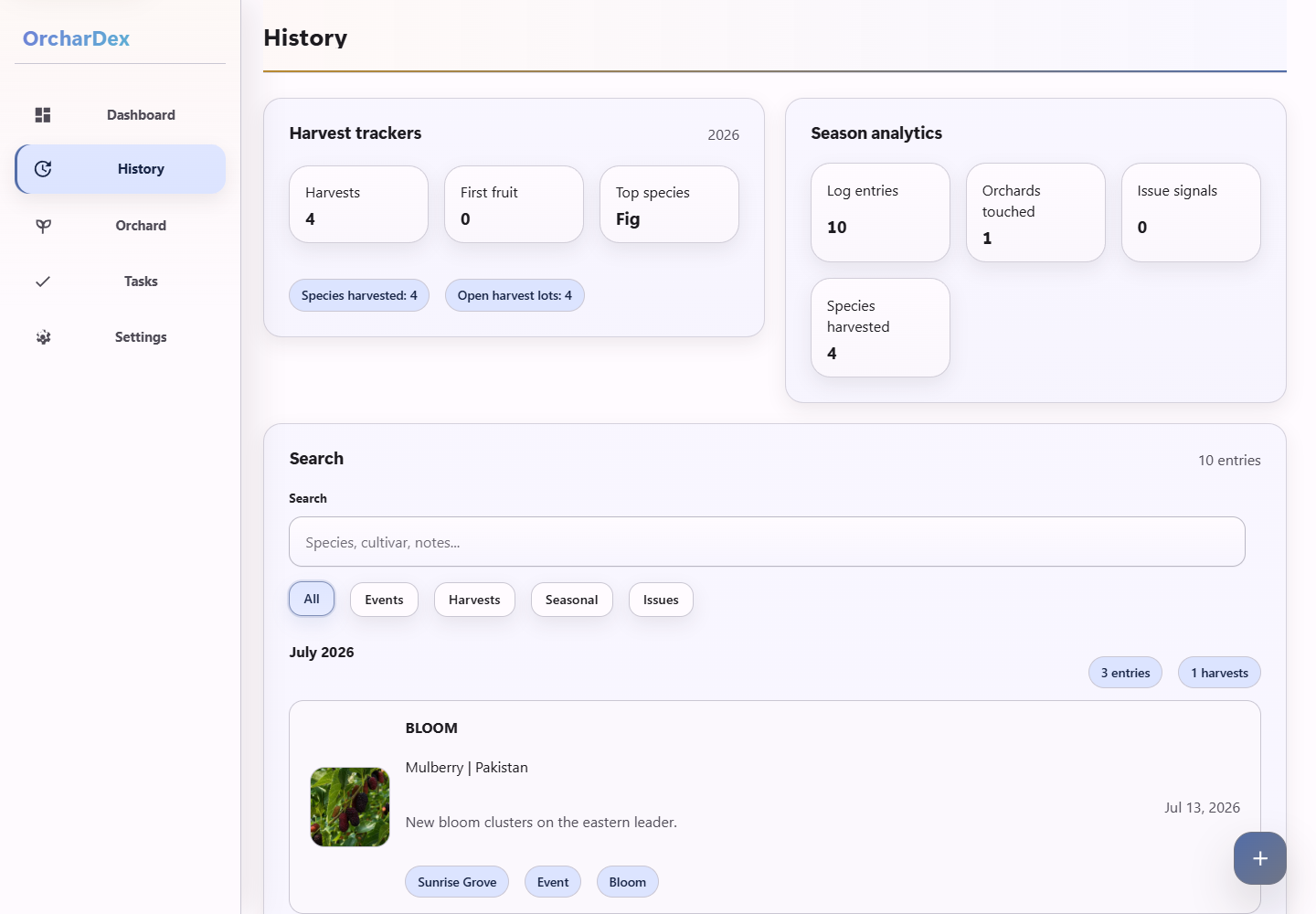
The evidence begins with a dated event tied to an edible plant: budding, flowering, ripening, or harvest. A budding or flowering observation can be present, absent, or uncertain, with optional intensity and notes. Ripening observations and dated harvests preserve fruit timing. This records what you saw instead of silently converting every entry into a positive signal.
2. The app groups evidence by plant and stage
A cultivar in one growing space can behave differently from another plant elsewhere. OrcharDex keeps observations connected to the plant record and analyzes relevant stages separately. Harvest dates help personalize expected fruit timing; bud and bloom observations help personalize bloom-related windows.
3. Multiple seasons matter
One year can be unusual. The learning logic examines evidence across years and resists turning a one-year outlier into a dependable window. Dense observations from a single season do not automatically create high confidence. Stale evidence can also reduce confidence, because an old pattern may no longer describe the plant well.
4. Patterns can take different shapes
The model can represent annual, multiple, extended, irregular, or insufficient patterns. That avoids forcing every plant into one short yearly window. The displayed result depends on the observations available for that plant, not on a promise that all cultivars or climates behave alike.
5. Weak evidence produces caution
When history is sparse, inconsistent, or otherwise inadequate, OrcharDex can classify the pattern as insufficient, lower its confidence, or withhold a forecast window. This is deliberate. A missing estimate is more honest than a precise-looking date unsupported by the record.
What the result does not mean
A learned window is not a guarantee, diagnosis, or replacement for local horticultural advice. Weather, plant health, age, pruning, pests, and recording habits can affect a season. Climate context stays separate from observed phenology. OrcharDex helps you inspect your history; you remain the person interpreting the garden.
The short answer
Keep the record close to the plant.
OrcharDex is a free, installable web app for fruit trees, vegetables, herbs, and other edible plants. It connects plant identity, photos, reminders, observations, harvests, and history across phones, tablets, and computers.
Open OrcharDex